Couples planning a small wedding in Maryland usually discover the same surprise: the ceremony is the easy part. The legal part runs on a schedule set by the state — a marriage license from the right county, a short waiting period before the license can be used, and a signed license that has to travel back to the clerk afterward. None of it is complicated, but the steps have an order, and doing them out of order is how couples end up rescheduling a ceremony they had already announced.
This guide walks through the whole sequence the way an officiant sees it: what to do at the clerk's office, what actually happens during a small civil ceremony, and what happens to the paperwork after you say your vows. If you are planning an elopement, a backyard wedding or a courthouse-style ceremony anywhere in Maryland, this is the checklist to work from.
Step one: the marriage license — from the ceremony county
In Maryland, a marriage license is issued by the Clerk of the Circuit Court, and the county that matters is the county where the ceremony will take place — not necessarily the county where you live. A ceremony in Rockville needs a Montgomery County license; a ceremony in Annapolis needs an Anne Arundel County license, even if both partners live somewhere else. Getting the license from the wrong county is the single most common wedding-paperwork mistake, and it cannot be fixed at the ceremony — the license simply does not authorize a marriage in a different county.
At the clerk's office you will give your full legal names, dates of birth, Social Security numbers and information about any previous marriages and how they ended. Bring current government photo identification. In many counties one partner can apply for both, but the details vary slightly from county to county, so check that clerk's current instructions before you go. Maryland does not require a blood test. What the clerk hands you — the license itself — is the document your officiant will complete and sign on the wedding day, so keep it flat, clean and safe.
Step two: respect the waiting period and the six-month clock
A Maryland marriage license is not usable the moment it is issued. Under Maryland law it becomes effective at 6:00 a.m. on the second calendar day after the day it was issued — in plain terms, there is a waiting period of roughly two days between picking up the license and holding the ceremony. A couple that collects a license on Friday cannot marry with it on Saturday. Build the license appointment into your plan at least a few days before the ceremony date, and treat a same-week license errand as a risk, not a shortcut.
The clock runs in the other direction as well: the license is valid for six months from its effective date. Marry after it expires and there is no ceremony to perform — you start again at the clerk's office. Between those two limits sits your real planning window. An honest accuracy note: county offices occasionally adjust procedures and office hours, and narrow exceptions to the waiting period exist in specific circumstances. The clerk issuing your license is the authority on your exact dates — confirm them when you apply, not the week of the wedding.
Step three: what happens at a small civil ceremony
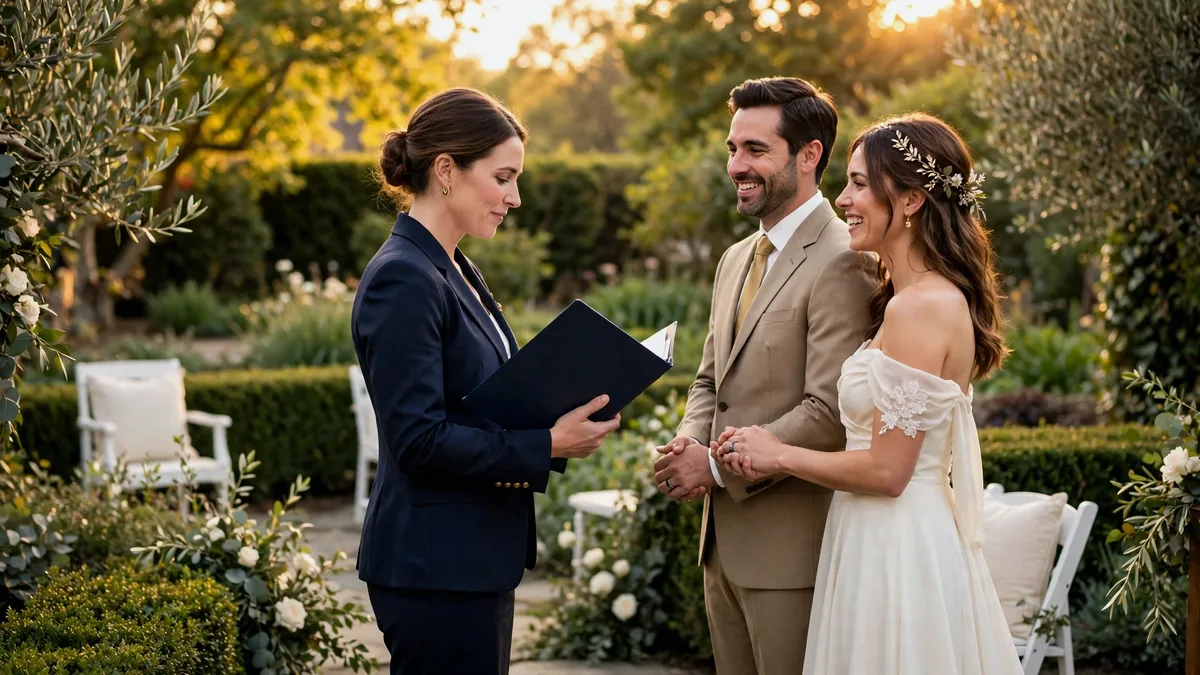
A civil ceremony performed by a professional officiant is short, personal and legally complete. Before the day, you and your officiant talk through the shape of it: a brief legal ceremony, a traditional script, or a ceremony built around vows you wrote yourselves. On the day, the officiant confirms the license is in hand and valid, gathers the couple — and any guests — and leads the ceremony: a welcome, the declaration of intent, vows, an exchange of rings if you wish, and the pronouncement. The ceremony itself often takes ten to twenty minutes; what makes it a marriage is not its length but the license behind it and the signatures that follow.
Maryland does not require witnesses at the ceremony, which is one reason elopements work so well here: the couple and the officiant are legally enough. You can marry in a garden, a living room, a restaurant's private room, a park pavilion or a hospital room — the location is your choice, as long as it is in the county named on the license and the officiant can complete the paperwork on the spot.
Languages and personal touches
A ceremony should sound like the people in it. Ronit Lytvak officiates in English, Russian, Hebrew and Spanish, and can build a ceremony that moves between languages so both families hear every word — vows in one language, the pronouncement in another, a reading by a family member in a third. Personal touches that fit naturally into a civil ceremony include your own vows, a unity ritual, music from a phone speaker, and readings by guests. What cannot be personalized is the legal core: the identities, the consent and the license must be exact, and a good officiant protects that core while letting everything around it be yours.
After the ceremony: signing and filing
Immediately after the pronouncement, the officiant completes the marriage license — names, date, place and signatures — and the couple signs as well. The license has more than one part: one copy is yours to keep, and the officiant's copy must be returned to the clerk of the county that issued it so the marriage is recorded. That return trip is not a formality to postpone; until the signed license is filed, the county has no record of your marriage, and certified copies of your marriage certificate — the document you will need for name changes, insurance, immigration files and everything else — are issued from that record. When you book, ask exactly how the signed license travels back and when you can order certified copies from the clerk.
Mistakes that put a wedding at risk
The pattern is consistent: the license comes from the wrong county; the ceremony is scheduled inside the waiting period; the license expires before a postponed ceremony; names on the license do not match the couple's identification; or the license is left at home on the wedding day. Every one of these is preventable with a five-minute check a week ahead: confirm the county, confirm both dates — effective and expiry — confirm the names letter by letter, and put the license with the rings the night before.
Elopements and vow renewals
Two simpler cases deserve a mention. An elopement follows exactly the same legal steps as any other Maryland wedding — license, waiting period, ceremony, filing — just with fewer chairs. A vow renewal needs no license at all, because you are already married; it is purely ceremonial, which makes it the most flexible ceremony of all. Couples renewing vows often choose the words they wish they had said the first time, in the language of the family gathered around them now.
If you are planning a small civil ceremony in Maryland and want an officiant who handles the license choreography as carefully as the words, call Ronit Lytvak at (202) 899-0067. Describe your date, your county and the ceremony you imagine — you will get a clear plan for the license timing, the ceremony itself and the filing afterward, in English, Russian, Hebrew or Spanish. RL Notary serves couples across Maryland seven days a week, 7 AM to midnight.